
China’s FMCG Shift Signals New Rules for Dietary Supplement Brands
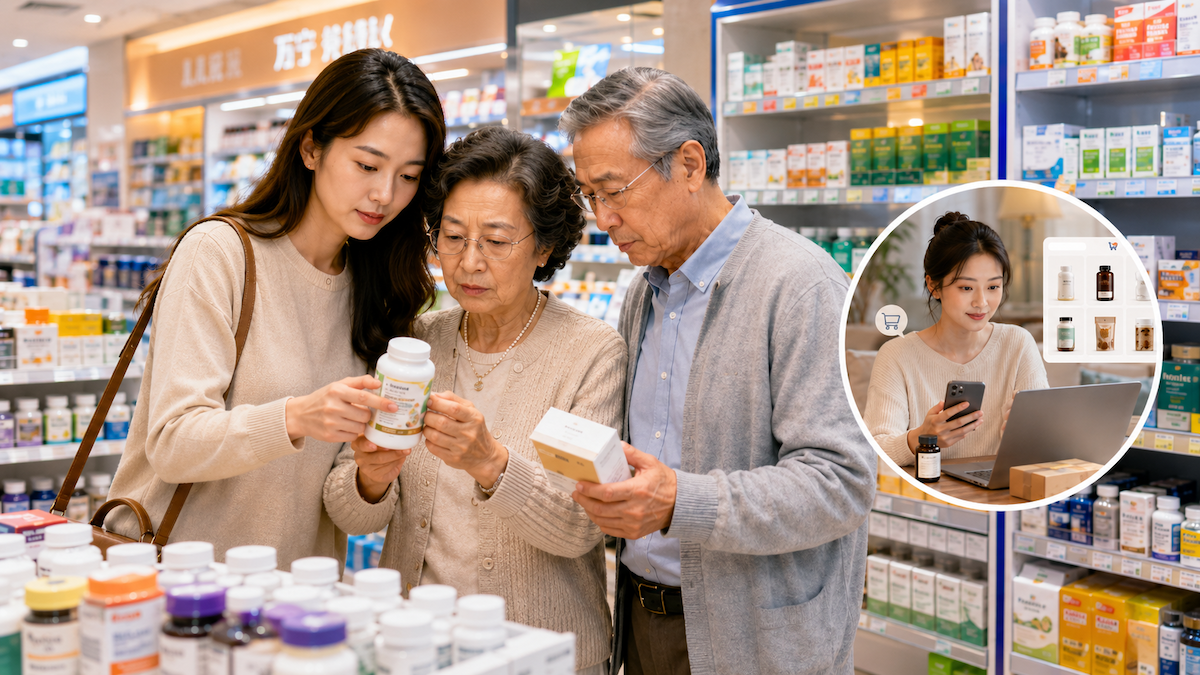
China’s fast-moving consumer goods market is entering a slower, more competitive, and more value-driven phase. According to China Daily, citing the 2026 China Shopper Report from Bain & Company and Worldpanel by Numerator, urban FMCG spending in China grew only 0.9% year-on-year in 2025, while volumes increased 3.6% and average selling prices declined 2.6%. This suggests that consumers are still buying, but they are becoming more selective, more price-conscious, and more demanding when evaluating value.
For the dietary supplement and functional food industry, this is an important signal. Growth in China is no longer simply about premium positioning, imported-brand appeal, or launching more SKUs. Companies must now prove why their products deserve consumer attention, shelf space, and repeat purchase in a market where affordability, convenience, channel strategy, and clear product benefits are becoming more important.
One of the biggest shifts is demographic. China Daily reported that China’s population aged 60 and above has reached roughly 320 million, while single-person households now account for nearly one-quarter of all households. These changes are highly relevant to dietary supplements. Older consumers may drive demand for products related to healthy aging, bone and joint health, eye health, cardiovascular support, digestive health, protein nutrition, and mobility. Smaller households may also favor smaller pack sizes, convenient formats, and products designed for daily routines rather than bulk family purchasing.
At the same time, lower-tier cities are becoming increasingly important. The report noted that Tier 4 and Tier 5 cities were key drivers of incremental FMCG growth in 2025, supported by improved logistics, modern retail expansion, and digital commerce. For supplement brands, this suggests that future growth may not be limited to Beijing, Shanghai, Guangzhou, Shenzhen, and other major urban centers. Companies that understand regional price points, local consumer needs, and emerging retail formats may be better positioned to reach China’s next wave of health-conscious consumers.
Digital and new retail channels are also reshaping the market. E-commerce accounted for 38% of urban FMCG sales value in 2025, while online-to-offline FMCG sales grew nearly 8% year-on-year in the third quarter of 2025. Warehouse clubs, snack discount chains, hard discounters, and membership-based retail formats are also gaining influence. For dietary supplements, this means companies need a more channel-specific strategy. A product that works on Tmall or JD may need different pricing, packaging, claims communication, or bundling to succeed in O2O, Douyin, warehouse clubs, or lower-tier city retail formats.
Another important takeaway is the rise of domestic brands and private label. China Daily reported that domestic brands continued to strengthen their position across multiple categories, while private label sales rose more than 57% year-on-year in 2025 to reach 32.7 billion yuan. This should be watched closely by global supplement companies. Chinese brands are often faster at localizing formats, adjusting price points, working with influencers, and responding to consumer trends. Meanwhile, private label growth could create both competition and opportunity, especially for ingredient suppliers, contract manufacturers, and companies able to support retailers with differentiated, compliant, science-backed products.
The article also highlights a major challenge around innovation. New SKUs accounted for roughly 40% of total SKU counts between 2022 and 2025, but only 3.9% of new products launched in 2024 reached at least 1% penetration in their first year. This is especially relevant for dietary supplement companies, where new ingredients, new delivery formats, and new functional claims are common. The message is clear: launching more products is not the same as building successful products. Companies need stronger consumer insight, clearer benefit communication, better evidence, and more disciplined go-to-market execution.
What This Means for the Dietary Supplement Industry
For the supplement industry, China’s changing FMCG market points to several strategic priorities.
First, value-for-money positioning is becoming essential. This does not necessarily mean the cheapest product wins. Rather, consumers are weighing price against quality, efficacy, brand trust, convenience, and perceived benefit. Supplement brands need to communicate clearly why their products are worth the price.
Second, healthy aging may become an even stronger long-term growth driver. With China’s aging population expanding, products addressing mobility, muscle maintenance, bone health, cardiovascular health, cognition, immunity, and digestive wellness may have significant potential, provided they are positioned appropriately and comply with China’s regulatory requirements.
Third, companies should rethink channel strategy. E-commerce remains critical, but O2O, warehouse clubs, lower-tier city retail, discount formats, and private label partnerships are becoming more important. A one-size-fits-all China strategy is less likely to succeed in this more fragmented market.
Fourth, innovation must be more disciplined. New ingredients and formats can still succeed, but only when they are supported by strong consumer relevance, regulatory clarity, credible science, and a clear commercial pathway.
China remains one of the world’s most important markets for dietary supplements, functional foods, and health products. However, the market is becoming more complex. Companies that succeed will likely be those that combine science, compliance, local consumer understanding, flexible channel strategy, and pricing models that match China’s new value-conscious consumer environment.
(Source: China Daily & HPA-Global)
If your company is active in the dietary supplement, functional food, ingredient, or health products industry and is not yet a member of HPA-Global, we invite you to consider joining the association. HPA-Global supports members with China and global market intelligence, marketing visibility, industry connections, and access to regulatory support for supplements, ingredients, and related health products in China and other key markets. Learn more about membership here: https://hpaglobal.org/membership/